
You already know the platform earns its keep. The hard part is walking into the renewal review and proving it to a room that only sees the invoice.
That isn’t a technology problem. It’s a value problem, and it lands on you, because you’re the one who can see what the platform actually produces. This is how to make that case, and how to make the platform worth even more before the next one.
Why does Adobe look overpriced at renewal?
Because the only thing anyone measured is the cost. The invoice is exact to the dollar. The value the platform produced was never instrumented, so at renewal the spend sits on the table with nothing beside it, and a number with nothing beside it always looks too big.
You can see that value. The launches that shipped on time, the campaigns that turned around in days, the pages that went live without a developer ever touching them. The business can’t see any of it, because none of it was counted the way the cost was counted. That gap is not Adobe’s fault. It’s an instrumentation gap, and it’s the reason a healthy investment reads as a bloated one on the spreadsheet.
So the question that sounds like “is Adobe still worth it?” is really two quieter ones. Are we measuring what the platform produces? And have we resourced it to produce anything worth measuring? You want to walk in with answers to both, before someone in finance answers them for you.
Is AEM underperforming, or just under-resourced?
Almost always under-resourced, not underperforming. The pattern we see most often is a capable but thin team asked to run several Adobe products at once, where the budget covered the licences and then stopped.
There was no line for the people who make the platform sing, no line for the tooling that speeds them up, and no scorecard to prove any of it landed. So the team does what thin teams do. They keep the lights on. They ship generic work (a template here, a component there) and never reach the differentiated, revenue-adjacent projects that would have made the investment obvious.
The platform isn’t failing. It’s idling, because it was bought and then left unstaffed. This is the part that gets misdiagnosed at renewal time. Leaders look at flat outcomes and conclude the technology underdelivered. In our experience, the technology was never the variable. The staffing and the measurement were.
Should you switch off Adobe to cut costs?
No. Switching platforms re-buys the same problem and staples a migration bill to the front of it.
The tempting move is to shop. If Adobe looks expensive with nothing beside it, surely a different platform comes in cheaper. It won’t, for a simple reason. A new vendor inherits the exact conditions that made the last one look bad: a thin team, a generic backlog, and an empty value column. You don’t leave the problem behind. You repackage it.
We’ve watched teams spend a year and a serious budget moving off a platform that was never the issue, only to land in the same spot eighteen months later, asking the same question about the new logo on the invoice. A migration can absolutely be the right call for real architectural reasons. Escaping a measurement gap is not one of them.
How can a small team make Adobe pay off?
Leverage. One or two skilled people, sitting on a delivery platform that carries the mechanical build-and-migrate work, now produce what used to take a full AEM practice.
That last part used to be untrue. Practice-grade delivery meant practice-grade headcount: architects, front-end specialists, QA, the whole bench. For most agencies and lean in-house teams, that math never worked, so the platform stayed underfed.
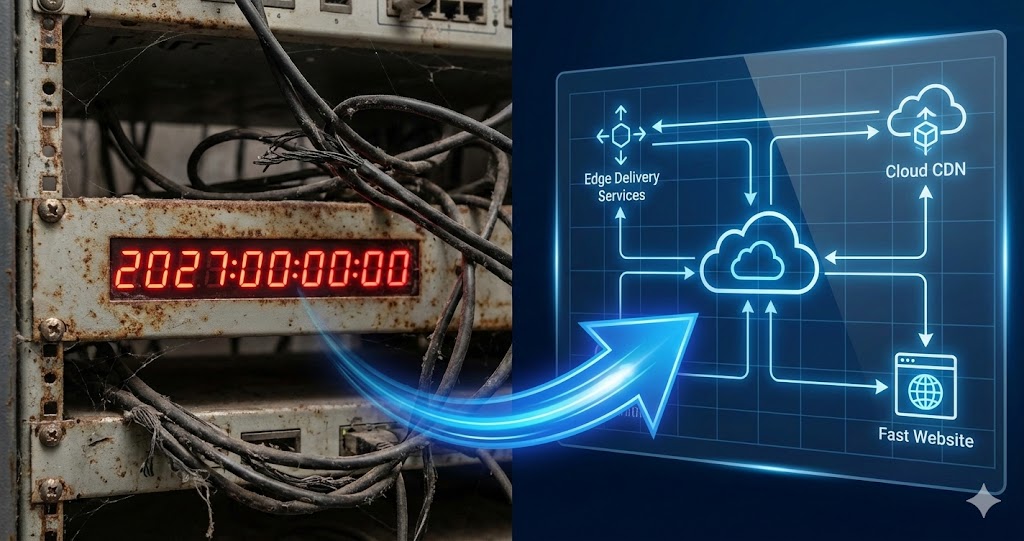
What changed is the arrival of a delivery platform underneath the people. This is the idea behind Launch Studio, and what we call Agentic Delivery: strategy and design stay human, while the mechanical build-and-migrate work becomes agentic. A small team builds and migrates on AEM Edge Delivery Services at the speed and quality a full practice would deliver. It snaps onto the existing Adobe stack rather than replacing it.
When that happens, the licence stops behaving like a sunk cost and starts behaving like a compounding one. The same subscription that produced a trickle of templates starts producing shipped, attributable outcomes, because the work moved from keeping-the-lights-on to actually building. We make the fuller version of this case in Why You Need an Agentic Platform, Not More AI Tools.
How do you measure the value of your Adobe investment?
With a scorecard simple enough to stand up before the next renewal. Four lines are enough to change how the number reads.
- Shipped outcomes per quarter. Count what the platform actually put into the world: pages, campaigns, migrations, experiments. Note which ones a stakeholder outside IT would recognize as valuable. This is the number that tends to be missing entirely.
- Time from request to live. How long does a typical change take to travel from “we want this” to in front of a customer? It’s the cleanest read on whether the platform is a bottleneck or an engine, and it drops quickly once a team has real tooling.
- Cost per shipped unit. Take the fully loaded platform-and-people cost and divide it by what got shipped. This turns an intimidating total into a per-outcome price, and a well-resourced platform’s per-outcome price keeps falling as the team’s patterns compound.
- Cost to build and maintain. This is the line where the architecture itself moves the number. On AEM Edge Delivery Services, content is pre-rendered at the edge and the traditional server tier goes away, so there’s no dispatcher to tune and no Java or OSGi stack to keep alive. Front-end work happens in plain JavaScript blocks with no build pipeline, which means less to implement up front and far less to maintain over time. Count the run-rate the platform never incurs alongside the outcomes it ships. This is a real part of what makes an Adobe investment pay off, and it’s the piece most renewal math forgets.
None of these need new software. They need a decision, made once, that the value side of the ledger is worth counting as carefully as the cost side. A team already running Launch Studio has a head start, because its plans, builds, and QA leave a record of what shipped and how long it took. The scorecard mostly writes itself.
What should you do before your next Adobe renewal?
Change what’s on the table before the meeting starts. Don’t re-litigate the platform. Do three things instead:
- Fund the lean team that converts the licence into delivered work. The subscription isn’t the investment; the people who turn it into shipped outcomes are.
- Give that team tooling that multiplies output, so two people can deliver at practice grade instead of triage speed.
- Stand up the four-line scorecard now, so the next renewal arrives with both columns filled in.
Do that, and the renewal stops being a referendum on whether Adobe is worth it. It becomes a plain read of a ledger that finally has two sides. As we argued in The Real Cost of Doing Nothing, the expense of drifting is real even when it never shows up as a line item, and this is one of the places it hides.
If you’re the one who has to defend the platform at renewal with a precise cost and an empty value column, you’re not alone. Most teams are one measurement habit and one staffing decision away from a very different conversation. Tell us what you’re running and what your team looks like today, and we’ll send back a straight read on where the platform is idling and what it would take to make it compound.